
Sarcopenia: The Silent Muscle Loss That Steals Your Independence
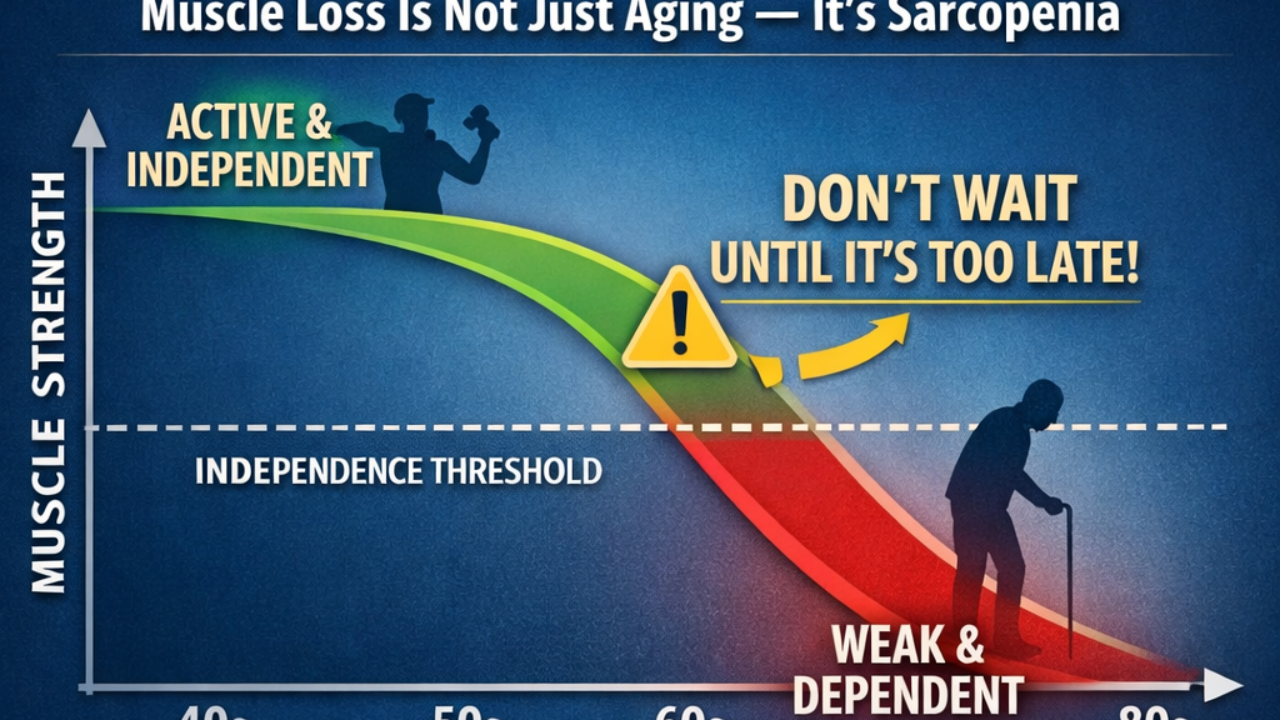
Most people think getting weaker is just part of aging—but what if it’s actually a condition you can slow, stop, or even reverse?
Seniors Summary
Sarcopenia means loss of muscle. It happens as we age, but it is not just “normal aging.” Without strength training and daily movement, adults can lose up to 30% of their muscle by age 80. This leads to weakness, poor balance, and loss of independence. The good news is this: simple bodyweight exercises done consistently can rebuild strength at any age.
What Is Sarcopenia?
Sarcopenia is the gradual loss of muscle mass, strength, and function as we age.
The word comes from Greek:
- “sarx” = flesh (muscle)
- “penia” = loss
It literally means “loss of muscle.”
The term was introduced by
Irwin H. Rosenberg
to describe what he saw happening in older adults.
Is It Normal—or Preventable?
Here is the truth most people never hear:
Yes, some muscle loss comes with aging.
But most of it comes from inactivity.
When you stop using your mus...
Exercise & Longevity

The 4 Longevity Skills
Evidence-Based Predictors of Longevity for Seniors
Seniors Summary (Read This First)
Research shows that how long and how well we live is strongly linked to a few basic physical abilities. These abilities are not about athletic performance — they reflect independence, resilience, and recovery.
The strongest predictors of longevity in older adults are:
• Cardiorespiratory fitness (your engine)
• Lower-body strength (your legs)
• Walking speed and mobility (your steps)
• Ability to get up and down from the floor (your get-up skill)
The good news: all four can be tested at home and improved at any age with consistent, sensible training.
What the Research Shows
Walking Speed:
Studenski et al. (2011) concluded that gait speed is a powerful predictor of survival in older adults, stating:
“Gait speed was associated with survival in all studies… survival increased across the full range of gait speeds.”
(JAMA, 2011)
Strength:
A large meta-analysis by Garcia-Hermoso et al. (20...
Are Your Genes Your Destiny?
Are Your Genes Your Destiny? The Truth About Genetics and Longevity
Curiosity Hook
Many people believe their lifespan is already written in their DNA. Science shows something surprising — your daily habits matter far more than your genes.
Seniors Summary
Many seniors believe their lifespan is determined by genetics. Research shows genes usually explain only about 20–25% of how long we live. The remaining 75–80% is influenced by lifestyle habits such as physical activity, nutrition, sleep, stress management, and social connection. In other words, the way you live your life has a much bigger impact than the family you were born into.
Blog Article
How Much Do Genes Really Matter?
It is true that genetics plays a role in longevity. If many people in your family live a long time, you may have some helpful genes.
But modern research shows that genes are only a small part of the story.
Scientists who study aging have examined large populations, identical twins, and families with many peopl...
The One Simple Eating Habit That May Help Seniors Eat Less Without Dieting
Curiosity Hook
What if one of the most powerful nutrition habits for seniors had nothing to do with what you eat — but how fast you eat it?
Seniors Summary
Many seniors focus on what foods they should eat for better health. But research shows that how fast you eat may also matter.
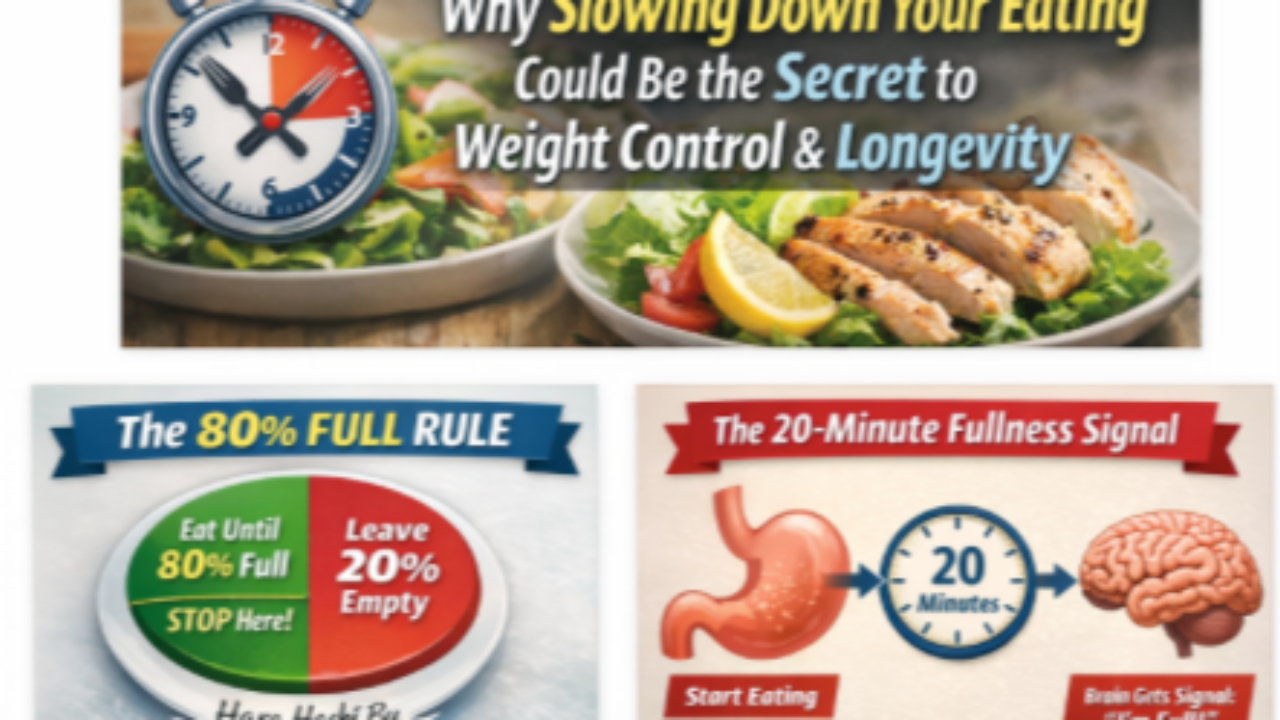
Eating slowly gives your body time to send fullness signals to your brain. These signals usually take about 20 minutes. When people eat too quickly, they often eat more food than they need before their brain realizes they are full.
Simple habits such as putting your fork down between bites, chewing more, and stopping at about 80% full can help control calories naturally and improve digestion.
Why Eating Speed Matters
Your body does not instantly know when you have eaten enough.
When food enters your stomach, your digestive system begins sending signals to your brain. These signals come from hormones such as GLP-1 and peptide YY, which help tell your brain that you are satisfied.
But there is a delay....
Oxidation, Bad Fats and Why They Matter
Oxidation is one of those health words that sounds complicated, but the idea is actually very simple—and very important.
Oxidized cholesterol and oxidized fats are not natural, healthy fats. They are damaged fats. In everyday terms, oxidation happens when something breaks down after being exposed to oxygen.
Think about rust.
When metal is left outside, it rusts. When a cut apple or potato turns brown on your kitchen cupboard, that’s oxidation. When cooking oil smells bad or tastes off, it has gone rancid. All of these are examples of oxidation at work.
The same thing happens inside your body.
Oxidation is not all bad. Your body uses oxygen to turn food into energy. That’s how you stay alive and active. Problems start when oxidation gets out of control and begins damaging healthy cells.
When fats and cholesterol are damaged by oxidation, they no longer behave normally. This is especially important when it comes to cholesterol.
Cholesterol itself is not the villain it’s often made out to be. Yo...
Reduce Oxidative Stress Naturally
Senior Summary Box
- Eat a variety of colorful whole foods daily
- Move your body most days
- Prioritize sleep and recovery
- Reduce avoidable lifestyle stressors
How to Reduce Oxidative Stress Naturally
This article is the companion to Reactive Oxygen Species and Antioxidants and is part of the Common Sense Nutrition framework used throughout Seniors Fitness with Ron and the book, 'Fitness Saved My Life'.
Oxidative stress is not something to fear. It’s something to manage. And the good news is that the most powerful tools are simple, free, and available to everyone—especially as we age.
Food First: Your Primary Defense
The body relies on antioxidants from real food to keep oxidation in balance.
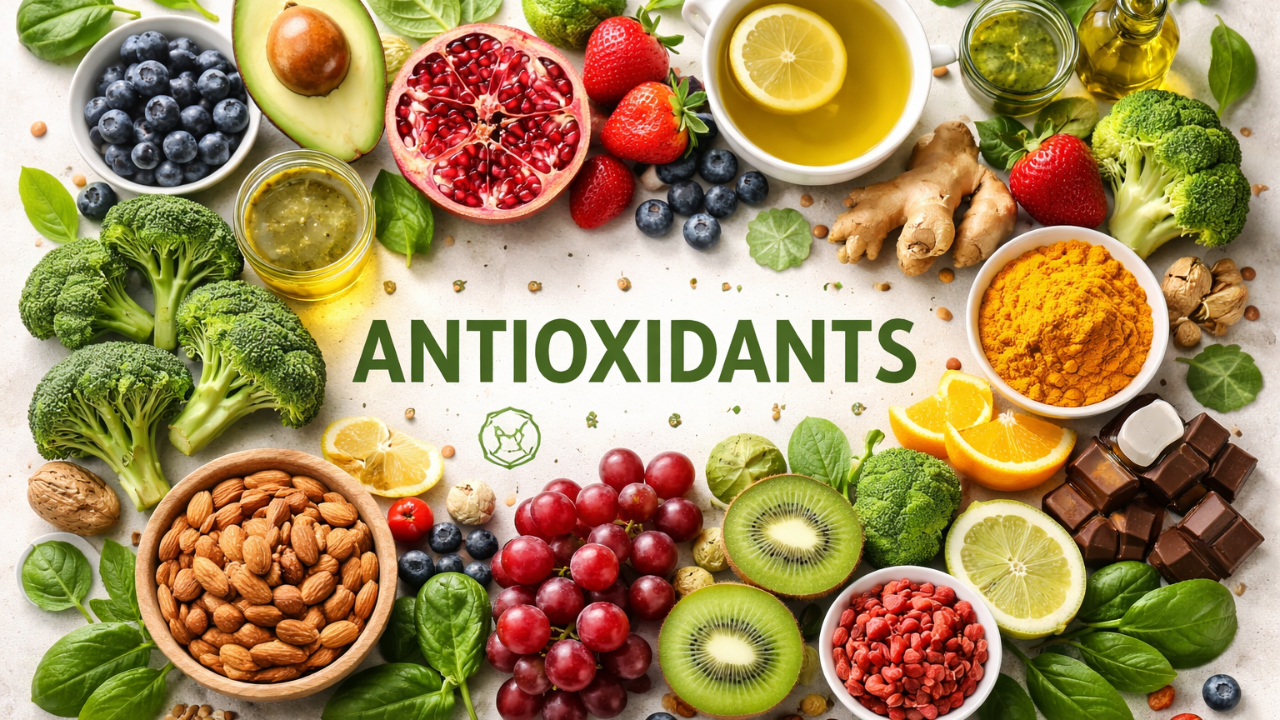
Color matters. The pigments in vegetables and fruits act as natural antioxidants. Leafy greens, berries, peppers, squash, and citrus all play a role.
This isn’t about superfoods or supplements. It’s about consistency and variety.
Exercise: Controlled Stress That Makes You Stronger
Exercise tem...
Myofascial Release
What Is Myofascial Release? A Senior’s Guide to Moving Better
Seniors Summary (Read This First)
- Myofascial release is about loosening tight connective tissue, not muscles alone
- Tight fascia can limit movement, cause aches, and make you feel “older than you are”
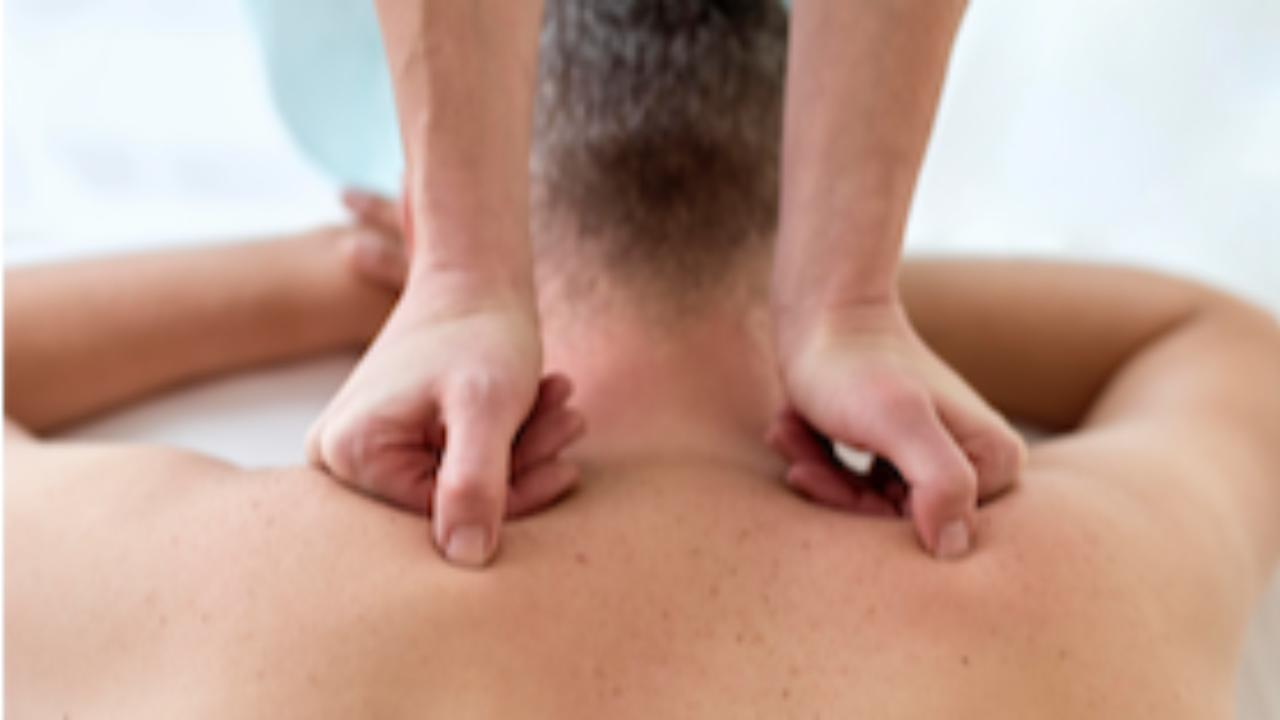
- Gentle pressure and slow movement can restore comfort and mobility
- It’s safe, effective, and especially useful for seniors when done properly
If you’ve ever said, “My muscles just feel tight all the time,” you may not be talking about muscles at all.
You’re probably talking about fascia.
Understanding fascia—and how to release it—can be a game changer for seniors who want to move better, feel looser, and stay independent.
What Is Fascia?
Fascia is a thin but strong connective tissue that wraps around everything in your body—muscles, joints, organs, and even nerves. The superficial fascia (right under your skin) allows you to pinch and lift the skin on your forearm. There is a deeper fascia that covers muscl...
Oxidative Stress: Why It Matters As We Age
Senior’s Summary (Read This First)
- Oxygen keeps us alive, but it also creates wear and tear inside the body.
• This wear and tear is called oxidative stress—think of it like rust forming inside your cells.
• Too much oxidative stress is linked to heart disease, cancer, arthritis, brain decline, and aging.
• Your body fights back using antioxidants.
• Exercise, real food, and common-sense nutrition help keep this balance in your favour.
• This is one more reason why fitness truly can save your life.
Oxygen is essential to life. We can’t live without it. Every breath we take allows our cells to produce energy so we can move, think, heal, and stay alive. But there’s a tradeoff.
Every time your body uses oxygen to make energy, it also produces waste products called free radicals. This happens inside the mitochondria—the power plants of your cells. In small amounts, free radicals are normal and even helpful. They assist with cell signaling and help the immune system respond to threats.
The ...
Take Control of Your Life
Take Control of Your Life
Internal Links
Why Balance Declines, and Why You Don't Have to Accept It?
Senior’s Summary (Read This First)
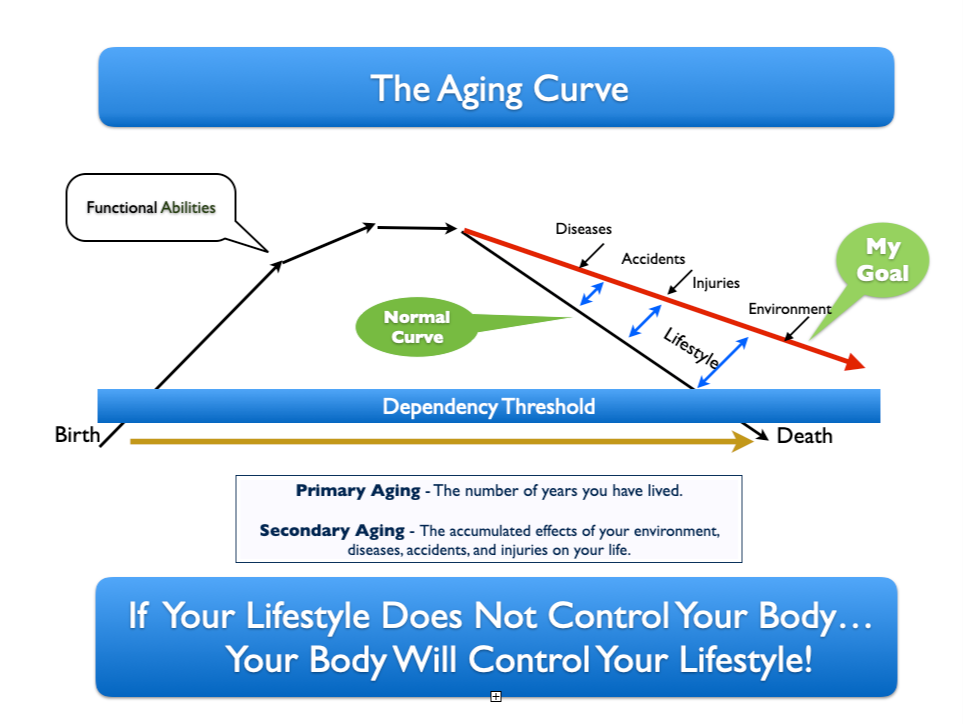
If your lifestyle does not control your body, your body will control your lifestyle.
That’s not a threat — it’s a reality many people discover too late.
• Inactivity and poor nutrition slowly limit what your body can do
• Extra weight, weakness, and stiffness reduce independence
• Loss of function leads to loss of choice
• The Aging Curve explains why this happens — and how to push back
• Small, consistent lifestyle choices restore control at any age
This is not about perfection. It’s about direction.
For most of my life, I believed my body would always do what I asked of it.
If I wanted to work harder, I did. If I wanted to move faster, I could. If something felt stiff or sore, I assumed it would pass. Like most people, I never questioned that assumption — until my body began answering back in ways I d...
Cooking Oils: Flash Point-Smoke Point
Seniors Summary (Read This First)
- Knowing the Flash point is about kitchen fire safety — not health
• Smoke point and oxidative stability determine how healthy an oil is when cooked
• Overheating oils creates inflammatory compounds
• Matching oil to cooking temperature protects your heart and metabolism
Related Blog Articles:
• Common Sense Nutrition – https://www.SeniorsFitnessWithRon.com/common-sense-nutrition
• Fitness Saved My Life – https://www.SeniorsFitnessWithRon.com/fitness-saved-my-life
• Understanding Inflammation – https://www.SeniorsFitnessWithRon.com/inflammation
• Heart-Healthy Cooking – https://www.SeniorsFitnessWithRon.com/heart-health
Flash Point vs Smoke Point: What’s the Difference
Flash point is a fire-safety measurement. It refers to the temperature at which oil vapors may ignite if exposed to flame. It has nothing to do with nutrition.
The smoke point is the temperature where oil begins to visibly smoke and chemically break down. Once this happens, the oil produces...